Follow the link and the instruction to engineer a working light for the City of Ember.
https://mysteryscience.com/energy/mystery-6/electrical-energy/37?r=2985720&s=social:pinterest
You Are Here

Monday, November 18, 2019

Tuesday, April 10, 2018
MAP Prep
Students,
please complete the MAP Practice Test. You may write your answers on a separate sheet of paper. Number 1, 2, 3, etc. Please Write the letter and the answer. Only include 1 answer per line on the sheet of paper.
You may use the internet to look up your answers you do not know or to check your answers.
Follow this link below to complete the MAP Practice Test.
MAP Practice Test
Please complete by close of Tuesday.
Friday, March 9, 2018
Graphing in Science
Complete these modules on Graphing as practice.
http://mathbench.umd.edu/modules/visualization_graph/page01.htm

http://mathbench.umd.edu/modules/visualization_graph/page01.htm
Tuesday, February 27, 2018
Cell Research WebQuest
Read and Follow Directions below on this WebQuest

Introduction
In the last few years, people have become increasingly aware of the many advances in all aspects of scientific research. There is an abundance of information on the Internet about new scientific discoveries involving cells, such as cloning and stem cell research, as well as answers to interesting questions about how the cells in our bodies work. People who write about scientific topics need to learn about the topics they are investigating in detail. They also need to use a writing style that is appropriate for the place where their pieces will be published. Writing articles for newspapers or magazines is different from writing for the Internet. What are some of the latest scientific discoveries about cells that are reported on the Internet? What types of scientific questions about the cells in the human body are answered on the Internet? How would you summarize this information for publishing on the Internet? In this WebQuest, you will explore new research involving different types of cells, read about how cells in the human body work, and write a summary of one of the topics you researched that is suitable for Internet publication.
Task
Your job in the WebQuest is to learn about current research involving different types of cells. You will investigate how scientists studying diverse scientific topics are adding to the current body of knowledge about cells. You also will explore questions and answers about the roles that different cells play in our bodies. You will answer a set of questions to demonstrate what you have learned. Once you've explored information to increase your knowledge of developments in cell studies and how cells work in the human body, you'll write a summary about one of the topics you investigated. The purpose of this summary is to write about a scientific topic using a style suited for posting on a Web site.
Process
Read through the following set of questions before you begin your Internet research. As you explore each site, look for answers to the questions.
1. What do researchers think is one cause of memory impairment related to growing older? What does new research show that may be able to help reverse this process?
2. How might fat cells be able to help people with spinal cord injuries?
3. How are frog eggs being used in research involving human cells?
4. What are Schwann cells? How are they affected in multiple sclerosis patients?
5. What role do cells play in preventing the stomach from digesting itself?
Next, visit the Web sites listed to find more information about another type of recent research involving cells. Keep in mind that not all Web sites are written specifically for students. Some of what you read might be challenging. Look for information that will be useful in completing this WebQuest. Write a summary of that topic that includes more than the answer to one of the questions. Your summary should be written to appear on a Web page about cells, life science, scientific research, systems in the human body, or a related subject.
Resources
Look at the Web sites given here to find information that will help you answer questions about cell research, and to gather information to use as you write your summary.
How does your stomach keep from digesting itself?
http://www.howstuffworks.com/question464.htm
Frog Eggs Rejuvenate Human Cells
http://www.nature.com/nsu/030714/030714-3.html
Discarded Fat Cells are Showing Some Nerve
https://consumer.healthday.com/cognitive-health-information-26/brain-health-news-80/discarded-fat-cells-are-showing-some-nerve-507400.html
Web sites below to help you prepare your summary to be posted on a Web site.
Web Writing
http://www.e-gineer.com/articles/web-writing-for-many-interest-levels.phtml
Creating Good Web Sites
http://www.leafdigital.com/class/lessons/writing/10.html
Writing for the Web
http://www.useit.com/alertbox/9703b.html
Conclusion
In the process of completing this WebQuest, you've read about recent research involving cells. You've found answers to questions about how the cells function in the human body. In the process of answering questions, your research gave you further insight to current and ongoing scientific study about cells. You've also enhanced your writing skills by preparing a summary about one of the research topics you investigated. The summary you wrote gave you the opportunity to understand more about the scientific content as well as present the information in a style compatible with publishing on the Web.
Wednesday, February 7, 2018
Osmosis Video
Follow the link to watch the video on Osmosis. After completing the video, take the quiz to test your gained knowledge.
http://highered.mheducation.com/sites/0072495855/student_view0/chapter2/animation__how_osmosis_works.html

http://highered.mheducation.com/sites/0072495855/student_view0/chapter2/animation__how_osmosis_works.html

Facilitated Diffusion
Follow the link below to watch the video on Facilitated Diffusion. After the video complete the quiz to test your gained knowledge.
http://highered.mheducation.com/sites/0072495855/student_view0/chapter2/animation__how_facilitated_diffusion_works.html
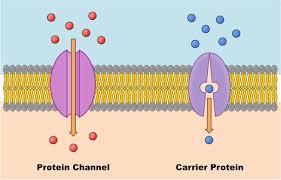
http://highered.mheducation.com/sites/0072495855/student_view0/chapter2/animation__how_facilitated_diffusion_works.html
Diffusion Video and Quiz
Follow the link to the video describing Diffusion. After the video complete quiz to test your gained knowledge.
http://highered.mheducation.com/sites/0072495855/student_view0/chapter2/animation__how_diffusion_works.html

http://highered.mheducation.com/sites/0072495855/student_view0/chapter2/animation__how_diffusion_works.html
Tuesday, November 28, 2017
Periodic Table of Elements Games
http://www.sheppardsoftware.com/Elementsgames.htm
Follow the link above and complete starting with Element quiz games Level L and Level 1.
Then move to the Periodic Table Games. Start with Level L and progress and completed successfully.
Follow the link above and complete starting with Element quiz games Level L and Level 1.
Then move to the Periodic Table Games. Start with Level L and progress and completed successfully.
Thursday, November 16, 2017
Interactive Periodic Table of Elements
Follow this link for the Interactive Periodic Table of Elements.
https://ninenet.pbslearningmedia.org/resource/phy03.sci.phys.matter.ptable/periodic-table-of-the-elements/?#.Wg3MiWiPK1s
https://ninenet.pbslearningmedia.org/resource/phy03.sci.phys.matter.ptable/periodic-table-of-the-elements/?#.Wg3MiWiPK1s
Thursday, November 9, 2017
Wednesday, November 1, 2017
Meramec Caverns
http://www.emissourian.com/features_people/feature_stories/missouri-s-buried-treasure/article_228ef0e6-4cbf-5c95-8ac2-65a886cfc3bd.html
Answer the questions about this article in preparation for the Meramec Cavern Field Trip.
1. What is MO sometimes referred to as according to the article?
2. How many caves have been surveyed in the state of MO?
3. Which cave is the largest commercial cave in MO?
4. In what year was Meramec Cavern open for public tours?
5. Who originally opened the cavern to the public?
6. What different strategies were used in advertising the caves to the public?
7. Which river is Meramec Cavern located near?
8. What problem continuously faces Meramec Caverns?
9. When can I tour Meramec Caverns like patrons did in the 30's?
10. How far will you travel while walking on the tour?
11. What were key ingredients in making gunpowder during the Civil War that was found in the cave?
12. Who and when originally named the cave "Saltpeter"?
13. Why didn't the confederacy like Union Soldiers using the cave as a gunpowder facility?
14. Who ran the "Yankees" out of the cave? When?
15. What Hollywood shows or films have used Meramec Caverns?
16. Describe the formations known as "soda straws". How are they formed?
17.Define "stalactites" (use Google). How are they formed?
18. Define "stalagmites" (use Google). How are they formed?
19. How are stalactites and stalagmites different?
20. Describe one of the three features highlighted in the article (Mirror Lake, Onyx Mountain, or the Wine Room). Which are you most excited to explore and why?
Tuesday, October 31, 2017
Thursday, October 19, 2017
The Rock Cycle Learning
Below you will follow the link to the appropriate website. Read the Introduction and follow the red link to begin.
Follow this link to the website: https://www.learner.org/interactives/rockcycle/index.html
When you are finished, raise your hand and I will come around and check your work.
Follow this link to the website: https://www.learner.org/interactives/rockcycle/index.html
When you are finished, raise your hand and I will come around and check your work.
Tuesday, March 1, 2016
Infectious Disease WebQuest
Infectious Disease
Exploration
A WebQuest for 8th
Grade Science
Designed by
Mr. Kopf
marvin.kopf@slps.org
marvin.kopf@slps.org


Diseases are among us!
Protect Yourself!
This document will guide you through your Webquest on a
discovery of understanding Infectious Diseases and Preventions. You will read to gain an understanding
of Infectious Diseases, Decode important terms in the war against disease,
Listen to prevention techniques, Warn others, and much, much, more.
You will not go on this journey alone. You will be teamed with one partner to
reach your goal of understanding “What is Infectious Disease” and “How can it
be prevented”?
After learning about Infectious Diseases, you will learn
about Infectious Disease preventions and inform others by:
- creating a PP slide used to inform students at Fanning Middle School of Infectious Disease Prevention Methods. These slides will be assimilated with other slides and presented in classrooms around our school.
To complete this journey and warn those around you, you will
need to follow the steps below carefully.
It is essential to first educate and understand and then share it with
the world around you.
- First, follow this link to the Mayo Clinic to begin learning about Infectious Diseases. Once you reach your destination, write the definition provided for Infectious Disease and note the causes and how they are spread. http://www.mayoclinic.org/diseases-conditions/infectious-diseases/home/ovc-20168649
- Second, watch this video from Discovery Education. It is about 2 minutes. In your notes, record your discovery of another name for Infectious Diseases and begin making a list of causes and preventions. You may want to use Cornell Notes as an organizer: https://app.discoveryeducation.com/learn/videos/D026C489-A4B0-4433-BFCF-80E6A6AC643B?hasLocalHost=false
- Third, gain access to these coded words at the link provided. Print this page and keep it with your notes after you have completed Unscrambling these words and reviewing the definitions: https://apps.nlm.nih.gov/againsttheodds/pdfs/ss/wordgame.pdf
- Fourth, now you are ready for some true detective work in the war against Infectious Disease. Choose one of the Case Studies listed below (there are four, but only choose 1). After your investigation, follow the fifth link below to complete your “Case Study Notes”. Print this document and keep it with your notes and Unscrambled Words.
- Diarrheal Disease: https://apps.nlm.nih.gov/againsttheodds/pdfs/ss/diarrheal_diseases_case_study.pdf
- HIV: https://apps.nlm.nih.gov/againsttheodds/pdfs/ss/HIV_case_study.pdf
- Smallpox: https://apps.nlm.nih.gov/againsttheodds/pdfs/ss/smallpox_case_study.pdf
- Malaria: https://apps.nlm.nih.gov/againsttheodds/pdfs/ss/malaria_case_study.pdf
- Case Study Notes: https://apps.nlm.nih.gov/againsttheodds/pdfs/ss/case_study_notes.pdf
- Fifth, it is now time for prevention. Watch the 3 minute video by following the link provided. Record in your notes preventions discussed in the video: https://app.discoveryeducation.com/learn/videos/8DEE1E3B-BEEA-4BC4-8237-A3A5CC78A40D?hasLocalHost=false
- Sixth, Follow the link to the Infectious Disease Preventions brochure. You are now ready to assist the CDC in the prevention of Infectious Diseases. This is an important document as you warn and inform others. Once you have read the document in full, ask your teacher to assign you a prevention method from the brochure: http://www.cdc.gov/ounceofprevention/docs/oop_brochure_eng.pdf
- Seventh, Time to inform your peers. You will create a PP slide of your preventative method – ONLY 1 SLIDE. The slide needs to include:
- The prevention method title (what is the action).
- A written description of the prevention (remember your PP training).
- A picture(s) to assist in describing the preventative method.
- Last, after you have completed these 7 steps on your journey turn in your notes, Unscrambled Words document, and Case Study Notes (remember to put your names on the documents). Then, email your PP slide to marvin.kopf@slps.org
- If you finish before your classmates, follow this link to play MedMyst an online Infectious Disease game: http://webadventures.rice.edu/
This Rubric will assist you on your Journey. Each student will be assigned an
individual grade based on your work as a group.
See Rubric on next page.
When you have completed this assignment, you will understand
the meaning of Infectious Disease, name some of the causes, researched an
Infectious Disease Case Study, and created a preventative measure.
| Webquest : Infectious Disease | ||||
| Teacher Name: Mr. Kopf | ||||
| Student Name: ________________________________________ | ||||
| CATEGORY | 4 | 3 | 2 | 1 |
| Clarity and Neatness | Powerpoint is easy to read and all elements are so clearly written, labeled, or drawn that another student could create the presentation if necessary. | Powerpoint is easy to read and most elements are clearly written, labeled, or drawn. Another person might be able to create the presentation after asking one or two questions. | Powerpoint is hard to read with rough drawings and labels. It would be hard for another person to create this presentation without asking lots of questions. | Powerpoint is hard to read and one cannot tell what goes where. It would be impossible for another person to create this presentation without asking lots of questions. |
| Use of Time | Used time well during each class period (as shown by observation by teacher, and completion of notes, PP, and documents) with no adult reminders. | Used time well during most class periods (as shown by observation by teacher, and completion of notes, PP, and documents) with no adult reminders. | Used time well (as shown by observation by teacher and completion of notes, PP, and documents), but required adult reminders on one or more occasions to do so. | Used time poorly (as shown by observation by teacher and/or completion of notes, PP, and documents) in spite of several adult reminders to do so. |
| Cooperation | Worked cooperatively with partner all the time with no need for adult intervention. | Worked cooperatively with partner most of time but had a few problems that the team resolved themselves. | Worked cooperatively with partner most of the time, but had one problem that required adult intervention. | Worked cooperatively with partners some of the time, but had several problems that required adult intervention. |
| Spelling & Grammar | No spelling or grammatical mistakes on a Powerpoint with required elements. | No spelling or grammatical mistakes on Powerpoint with 1 missing element. | One spelling or grammatical error on the Powerpoint with missing elements. | Several spelling and/or grammatical errors on the Powerpoint with missing elements. |
| Content | All content is in the students\' own words and is accurate. | Almost all content is in the students\' own words and is accurate. | At least half of the content is in the students\' own words and is accurate. | Less than half of the content is in the students\' own words and/or is accurate. |
| Required Elements | Powerpoint included all required elements as well as a few additional elements. | Powerpoint included all required elements and one additional element. | Powerpoint included all required elements. | One or more required elements was missing from the Powerpoint. |
| Date Created: Feb 21, 2016 10:37 pm (CST) | ||||
Subscribe to:
Posts (Atom)